20 Pro Ways For Deciding On Floor Installation
Wiki Article
Nail Down And. Glue Down. Floating Hardwood Explained
Ask three flooring specialists in Philadelphia the best way to have hardwood fitted and get three different responses -- not because they are incorrect, but due to the fact that the best method for installation is based on the specifics of your home. The subfloor type, levels of the floor, wood species, the humidity conditions, and your long-term plans of the space all contribute into the choice. A majority of homeowners only realize this after the fact which is the reason it's important to learn about the different aspects prior to obtaining estimates. This is how each method performs and how each is sensible.
1. Nail-Down is the standard for Solid Hardwood
Nail-down construction, sometimes known as staple-down the mechanical attachment of each plank of hardwood onto a wood subfloor, using a pneumatic nailer. This is the oldest method, and is still the preferred method of installing solid hardwood in Philadelphia homes with wood or OSB subfloors. The connection is sturdy, the floor feels solid underfoot and there's no glue which could fail in time. The majority of flooring contractors will choose to nail-down for solid wood in above-grade wood subfloors, without thinking twice.
2. Your subfloor determines if Nail-Down is even an option
Hardwood that is nail-down requires wood floorsfully stop. Concrete slabs that can be found on the ground floors of basements and in a few spaces of Philadelphia homes as well as Delaware County ranches, cannot accept staples or nails any way. If the subfloor is made of concrete nail-down is off of the table regardless of what flooring material you'd like to install. A flooring professional who is licensed will notice this on the spot during a inspection; however, an inexperienced one might not catch it until the job has already begun.
3. It's a Glue-Down that opens up concrete slab Installations
Glue-down hardwood installation is a full-spread glue that is glued to the subfloor prior to planks being set in place. This is the preferred method to use when you need real hardwood over concrete, such as basements in Montgomery County colonials, ground-floor slabs in contemporary South Jersey construction, or any space where nail-down isn't feasible. If it's done correctly and properly, a floor is extremely stable and offers a low amount of flex. The downside is that removal afterward is much more laborious when removing a nailed or floating floor.
4. Floating Hardwood does not connect to the Subfloor in any way
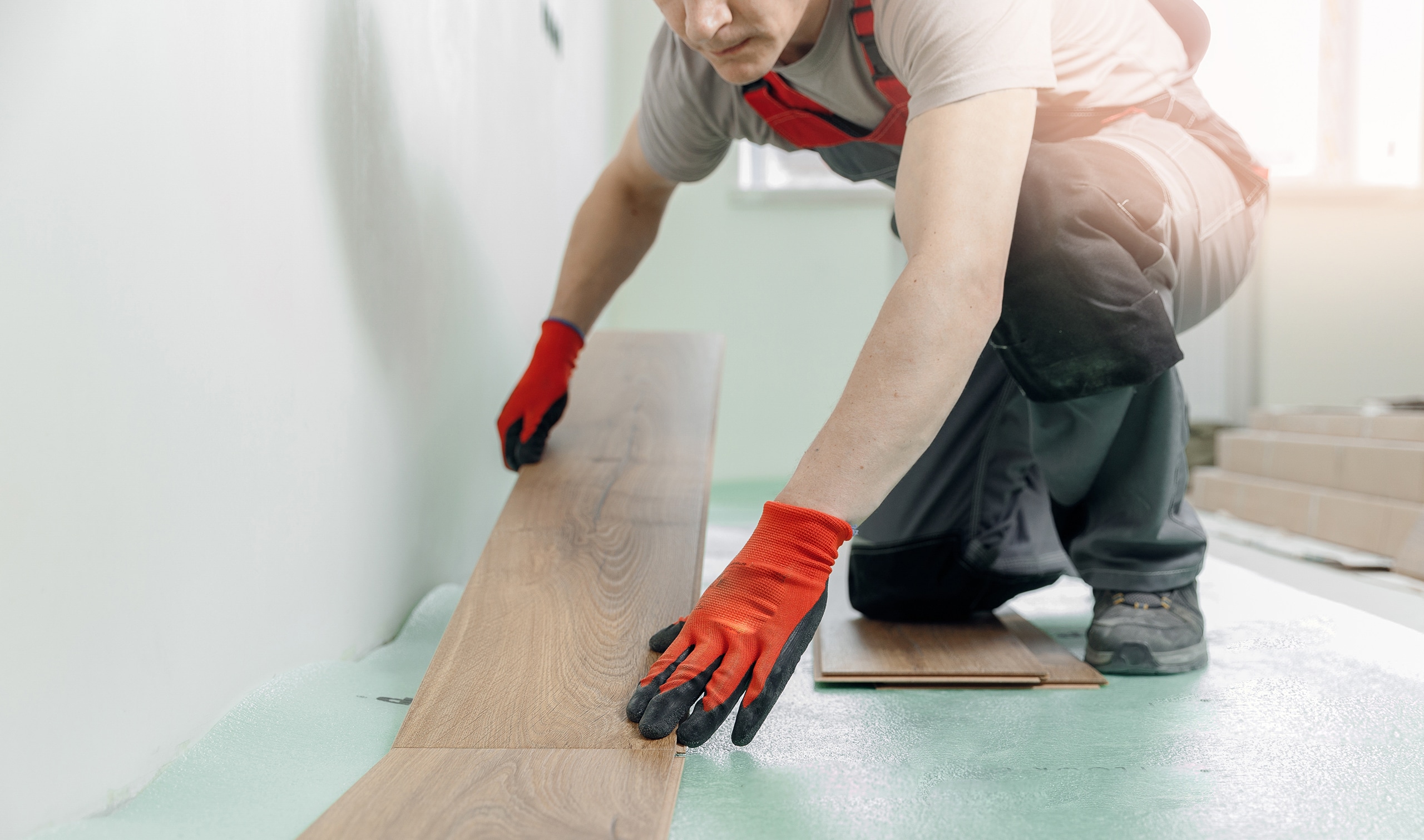
Floating installation implies that the planks become locked together at their edges and essentially rest on the top of the subfloor as one piece of flooring, moving as one unit instead of being fixed. It's faster to install, easier to remove, and more accommodating to imperfections in the subfloor than nail-down. Engineered hardwood is the most common choice for floating installation in Philadelphia since its layered construction is able to handle the minor movement that can occur with floating setup better than solid wood does.
5. Floating floors give you a distinctive feel beneath your feet
The same is true of showroom visits. aren't always able to convey. Floating hardwood gives a subtle feeling of movement when you walk upon the floor. It's not striking but noticeable when you compare it to an unlocked nail-down floor which is nailed into the subfloor. Most homeowners find it a thing of the past. Certain homeowners, particularly those who are upgrading from old nail-down hardwoods, there is an adjustment. If this is something you're concerned about have a flooring expert ask to walk you through the floor on a floating sample prior to making a decision.
6. Nail-Down Costs the Most Labor price of three
From a simple installation point of view nailing down hardwood requires the longest time and requires the most skill and skill, as evident in the prices for labor from Philadelphia flooring contractors. Subfloors must be clean with a flat surface and be thick. The planks must be acclimatized. The nailer requires careful technique to ensure that the planks do not split. Flooring installers who nail down properly are earning their money. If you're offered a inexpensive hardwood installation estimate make sure you ask the method they're aiming to use to secure it.
7. The Glue-Down process adds cost to the material but it also reduces the need for some labor Variables
Adhesive isn't cheap, as is glue-down, and requires the right material that's matched to the particular hardwood and subfloor combination. This being said, glue-down work over a concrete slab that has been properly prepared can move faster than nail-down on a subfloor in need of major repair. Flooring contractors in Bucks County and Delaware County typically suggest glue-down for engineered hardwood for slab-on-grade homes specifically since it brings real wood beauty with practical advantages.
8. Moisture Testing must be done prior to the method chosen is even considered.
This step is typically skipped over on budget jobs, and leads to issues within a year. Concrete slabs release moisture vapor when they are wet, and the excess moisture can cause glue-down adhesive to break in floating floors and cause them to break. Wood subfloors found in older Philadelphia rowhomes may be prone to excessive moisture from crawlspaces or inadequate ventilation. A moisture assessment prior to installation isn't a requirement -it's how a skilled flooring installer determines what technique is safe and what pre job is needed before.
9. Refinishing Compatibility Is Different Depending on the Method
Solid hardwood that is nail-down can be sanded and finished multiple times over its lifespanand is among strong arguments to consider it despite the more expensive installation cost. Most engineered hardwoods that are glue-down can be finished either once or twice depending on the wear layer thickness. Floating engineered wood may be less refinishable. If long-term floor maintenance is a part of your plans take this into consideration in the procedure before installation, not later.
10. The best method is an a Site-Based Decision, not a Preference decision
Some homeowners come to discussions about flooring with an notion of the installation method they'd like. Experienced flooring installers in Philadelphia will gently direct the discussion to consider what your home's requirements are. The best flooring companies aren't insisting on a certain methodthey're studying your subfloor, your moisture levels, your floor level, and the wood species you're using and making recommendations accordingly. That site-specific judgment is exactly what separates a licensed professional from someone who owns nailers. View the most popular
floor sanding and refinishing Philadelphia for site examples including kitchen tile flooring Philadelphia, bathroom tile installation Philadelphia, floor installation Bucks County PA, best flooring contractors Philadelphia, subfloor repair Philadelphia, flooring installation near me Philadelphia, nail down hardwood flooring Philadelphia, tile flooring contractors Philadelphia PA, floor sanding and refinishing Philadelphia, licensed flooring installers Philadelphia and more.
Tile Vs. Laminate: Which Is The Best Choice For Philly Kitchens
The flooring of the kitchen in the Philadelphia home is more important than the majority of rooms since kitchens here work hard. Rowhome kitchens which double as social hubs galley kitchens found in older twins that see constant circulation of people, and open-plan kitchens in renovated Delaware County colonials -- they all face the same core challenges: drop-ins, water, grease, and years of use. Tile and laminate show regularly in flooring estimations throughout the Philadelphia metro, and both have arguments to support them. But they are in no way interchangeable. Selecting which one is not appropriate for a kitchen is likely to be apparent much faster than in other rooms in the house. This is how the relationship actually goes down.
1. Water Resistance Is the First Filter and Tile is the Winner Well
Kitchens get wet. Dishwashers leak, sinks overflow and glasses end up slipping over, and the mop water sits longer than it is supposed to. Ceramic tile and porcelain are in essence impervious to water near the surface. the danger, if any lies in the grout. It is remedied with proper sealing. Laminate has a wood-fiber core that absorbs moisture as soon as it enters the subsurface layer. In a kitchen, this occurs eventually. When laminate expands around the edges or at seams, the damage will be permanent and eventually the flooring needs to be replaced. Flooring that is waterproof in a Philadelphia kitchen is a good objective, but laminate does not attain the requirement.
2. Laminate Has a Lower Entry Cost, but a shorter Kitchen Lifespan
Laminate flooring is the place where it makes its most convincing case. Its installation into Philadelphia kitchens consistently comes in lower than tile, less material costs, quicker installation, and there is no need for mortar or grout. For homeowners with a small budget, who want kitchen floors that look nice now, laminate can be appealing. The truth is the life span. When tile is installed properly in an Philadelphia kitchen could last for 20-30 years with no major intervention. Laminates within the kitchen being exposed to the conditions of moisture the kitchens create, frequently starts showing problems in five to 10 years.
3. Porcelain Outperforms Ceramic in High-Traffic Kitchen Conditions
There are many different types of tile in a kitchen. Porcelain is more dense, stronger and more porous than ceramic. It takes care of cast iron pans that have been dropped in addition to chair legs and constant foot traffic better over time. Ceramic tile flooring is an acceptable option for kitchens, especially lower-traffic kitchens or where budget is a significant factor however, the difference in density is critical in rooms that can take as much abuse as kitchens do. Philadelphia flooring contractors that perform quite a bit of kitchen tile installation are likely to steer one to use porcelain unless the cost is a major factor.
4. Laminate Comfort underfoot is a Real Advantage
It's not given enough credit in the tile in comparison to. laminate debate. Tile is cold and hard and standing on it for an extended cooking session can be a bit more fatiguing than standing on laminate, which provides a small cushioning and is warmer beneath your feet. In a Philadelphia rowhome where your kitchen flooring is set over a basement with no insulation, ceramic tile in winter is truly unpleasant with no radiant heat beneath. Laminate isn't the answer to every kitchen flooring problem but it does solve this problem and for those who stand for a long time in their kitchens, it's a meaningful quality-of-life factor.
5. Grout Maintenance is the only negative aspect of Tile
Tile wins on durability and water resistance, however grout is a problem. A grout that is not sealed or worn out in a kitchen absorbs grease, the stains and bacteria. The maintenance of tile floors to keep them fresh requires sealing the grout prior to construction and resealing every few years over the course of the floor. Philadelphia tile flooring companies that have this information available will do you a favor. For homeowners who are looking for tile with low maintenance are often those who end up having grey grout lines on their floors that were previously white.
6. Large Format Tiles alter the look and feel of your kitchen as well as the Subfloor requirements.
Large porcelain tiles which are 24x24 or more have become increasingly popular in Philadelphia kitchens, and they make a stunning impression in the right location. There is a drawback that large format tile is much more demanding of subfloor level that smaller ones. Subfloor irregularities displays as lippage edges with slightly different heights, which is both an aesthetic issue as well as a danger to the pedestrian. Subfloor repairs prior to large format tile installation in Philadelphia kitchens can be necessary but the cost doesn't appear in an estimate based on the materials used.
7. Laminate can't be refinished once It Wears
Flooring for kitchens made of hardwood which is more uncommon but not unheard of can be sanded and then refinished whenever the surface has wear. Tiles may have individual cracked tiles replaced. Laminate offers neither option. If the wear layer on the laminate is damaged, which will be faster in a kitchen than in a bedroom it is time to replace the floor. For homeowners who are planning to remain in a Philadelphia home for 15-plus years, the flooring's inability to be repaired is a valid future cost concern that a low upfront cost will not always be able to offset.
8. LVP Is the Third Option LVP is the third option that both comparisons keep pointing towards.
It's worth naming directly that luxury vinyl plank is similar to tile and is more durable and more comfortable underfoot than laminate, and it is more durable in kitchens even when it comes to the particular mix of foot traffic and moisture. LVP flooring has been installed into Philadelphia kitchens is increasing significantly because it has resolved the primary tension between these two options which the majority of homeowners have been comparing. It's not the ideal solution for every kitchen and it's also the reason that the tile is vs. laminate debate often ends in a flooring consultant recommending the third option.
9. The installation time varies dramatically between the Two
Laminate kitchen flooring can be put in swiftly. A small to medium kitchen can typically be done in a day. Installing tile takes longer, as mortar setting time mixing, grout curing, as well as the precision needed to make layouts and cutting can add up. For Philadelphia homeowners who need a functional kitchen that can be completed quickly and efficiently, laminate provides a benefit in scheduling. If you are doing a broader kitchen renovation in which the timeframe is already extended, the tile's requirements for installation become less of a factor in the overall selection.
10. The Kitchen's Subfloor's Existing Floor Should Influence the Final Call
More than aesthetics and budget plus personal preferences -- the state and design of the subfloor in your specific Philadelphia kitchen must be a key factor in what material you select. A sturdy, flat subfloor can open up a wide range of options including large format tile. A subfloor made of diagonal boards may need an overlay prior to tile becoming suitable, and that makes the comparison more difficult. Concrete slabs below grade changes the moisture conversation completely. The most reliable flooring professionals in Philadelphia will inspect the kitchen subfloor first and let that evaluation inform the plan rather than being guided by what they've got in the warehouse. See the best See the best flooring contractors Delaware County PA for blog advice including hardwood floor installation South Jersey, floor installation Delaware County PA, ceramic tile flooring Philadelphia, licensed flooring installers Philadelphia, tile flooring installation Philadelphia, flooring installation cost Philadelphia, flooring installers South Jersey, engineered hardwood installation Philadelphia, hardwood floor refinishing Philadelphia, waterproof flooring installation Philadelphia and more.
:max_bytes(150000):strip_icc()/easy-install-plank-vinyl-flooring-1822808-05-91e4c44966a145a39ad38430e4f7cc45.jpg)